Educational content only. Not medical, psychological, or health services. London, United Kingdom.

Creating Your Optimal Sleep Environment

Educational guidance on how your bedroom's physical characteristics—temperature, light, sound, and comfort—support restful sleep.

Key Environmental Factors

Five core elements that research suggests support sleep quality.

Temperature

Environmental temperature significantly influences sleep. Most research suggests cooler rooms (around 15–19°C) are conducive to sleep, though personal preference varies.

  • Experiment within the 15–19°C range
  • Use layers on the bed to adjust without changing room temperature
  • Ensure good air circulation
  • Consider seasonal adjustments

Lighting

Light exposure regulates circadian rhythms. Darkness before and during sleep supports melatonin production. Evening light reduction is crucial to the routine checklist.

  • Blackout curtains or eye mask for complete darkness
  • Reduce screen brightness 60+ minutes before bed
  • Consider warm-toned or red-spectrum lighting in evenings
  • Get morning light exposure to regulate circadian rhythm

Sound

Quiet sleep environments support uninterrupted rest. Sensitivity to sound varies widely, so personalisation is important. Some find white noise helpful.

  • Use earplugs if sensitive to sound
  • Try white noise, fan, or nature sounds if silence feels too quiet
  • Address controllable sources (devices, appliances)
  • Note peak noise times in your location

Comfort & Bedding

Physical comfort is essential. Your mattress, pillow, sheets, and blankets should support your body and preferences without distraction.

  • Replace mattress every 7–10 years
  • Choose pillows that support your sleep position
  • Prioritise breathable fabrics
  • Keep bedding clean and fresh

Air Quality

Fresh, clean air supports better rest. Stale or dry air can disrupt comfort. Consider humidity and ventilation as part of your environment.

  • Ventilate your room before bed
  • Humidity ideally between 30–50%
  • Consider a humidifier in dry climates
  • Remove potential allergens where possible

Space Purpose

Bedrooms used solely for sleep (and intimacy) create stronger sleep associations. Avoid working, watching stimulating content, or eating in bed when possible.

  • Keep work equipment out of the bedroom
  • Avoid screens in the final hour before sleep
  • Keep the room tidy and visually calm
  • Reserve bed primarily for sleep and rest
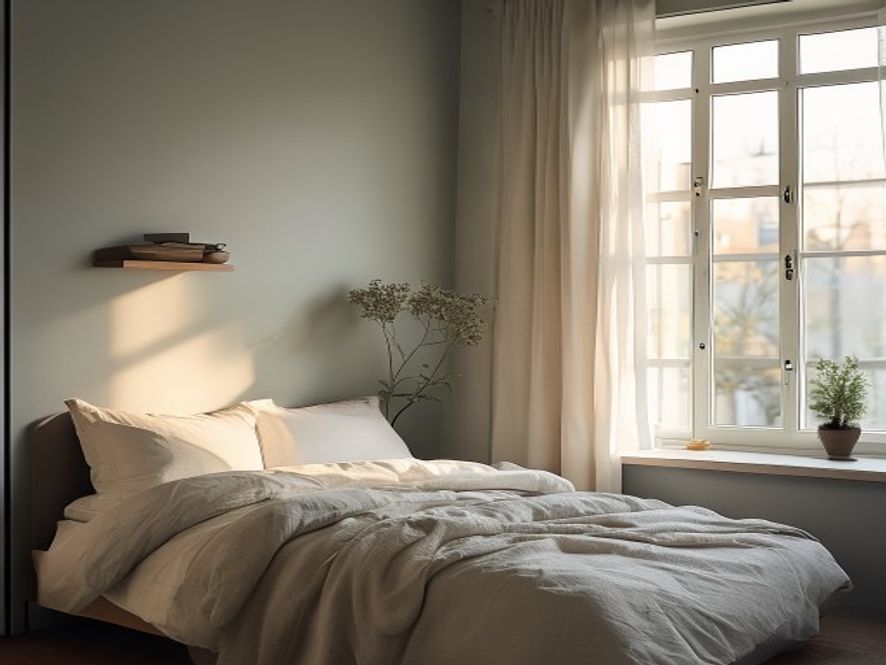
Minimalist bedroom with soft lighting and neat furnishings

Adapting to Your Constraints

Perfect sleep environments are often impractical. You may live in a flat with street noise, share a bedroom, or have limited control over temperature. Educational approaches focus on working within your real constraints.

Start with what's most controllable and impactful for you personally. Blackout curtains may matter more than temperature adjustment. A single change tried consistently over two weeks will reveal what's meaningful.

Consider which factors are within your control:

  • Fully controllable: bedding, pillow, personal lighting, noise management
  • Partially controllable: room temperature, ventilation, décor
  • Difficult to control: neighbourhood noise, shared spaces, rental restrictions

Build your environment checklist around what you can realistically change.
Environment Checklist Template

Use this as a starting point for your personalised environmental audit.

Weekly Environment Review

Rate each factor on a scale of 1–5 (1 = needs improvement, 5 = optimal for you):

Temperature comfort: ☐ 1 ☐ 2 ☐ 3 ☐ 4 ☐ 5
Darkness/lighting: ☐ 1 ☐ 2 ☐ 3 ☐ 4 ☐ 5
Sound/noise level: ☐ 1 ☐ 2 ☐ 3 ☐ 4 ☐ 5
Bed comfort (mattress, pillow): ☐ 1 ☐ 2 ☐ 3 ☐ 4 ☐ 5
Air quality/freshness: ☐ 1 ☐ 2 ☐ 3 ☐ 4 ☐ 5
Visual calm/tidiness: ☐ 1 ☐ 2 ☐ 3 ☐ 4 ☐ 5

Focus on the two lowest-rated areas. What's one small change you could make this week?

Optimise Your Sleep Environment

Get personalised guidance on which environmental factors matter most for your situation.

Discuss Your Environment